Thursday, December 6, 2012

MineMineMine!

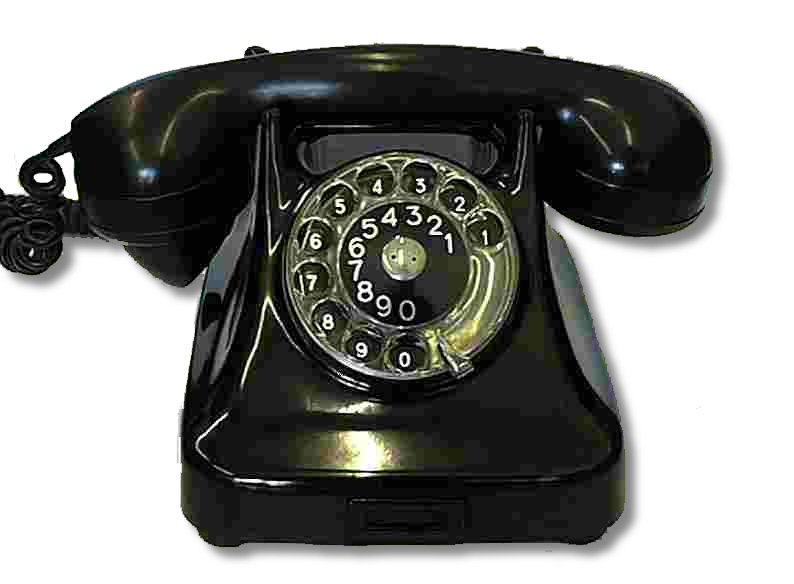
"I love that old phone with a passion. It was the only real property Seymour and I ever had in Bessie's entire kibbutz. It's also essential to my inner harmony to see Seymour's listing in the goddam phone book every year. I like to browse through the G's with confidence."

-Buddy Glass, explaining why he doesn't want his old phone disconnected four years after his brother Seymour's death. Franny and Zooey, By J. D. Salinger. 


I love the quote above so much that I used it to begin one of my chapters in The Empty Room. It really gets at the point that though the people we love cease to physically exist when they die, there is a sense of continued connection. And because of that, it's hard to imagine ever, say, erasing said loved one's contact information--now, alas, unusable--from one's address book.

Or, since we're now in an era when phone books may soon become defunct themselves, erasing Facebook and LinkedIn pages. We like some reminder that our people were here--and why shouldn't we? The idea that love and connection ceases when the physical bond does is absurd.

Along these lines, it occurred to me, awhile ago, that I could Google my brother. And it was in pursuing this occasional past time that I happened upon some really weird bookmarks, so to speak, of his presence.

Here's what I found: A Facebook page. And a book on Amazon. Both in my brother's name. Both seem to have somehow been generated by Wikipedia (where he also has a page--mostly generated from my book, it seems).

I suppose I should be happy that he's been noticed and noted by someone besides me, that others know he existed and find him interesting. But my first reaction, I must say, was more along the lines of WTF? A fan page?

Maybe it's because these marks of his presence were not made by me, not controlled by me. Buddy, after all, was ostensibly the one who placed and renewed Seymour's listing in the phone book. So, it could be just a case of mineminemine.

With the advent of public sharing in the form of Google, Facebook et al, we both gain the ability to browse well beyond the phone book with confidence with regard to lost loved ones. But we also lose a little bit of control, too. Now, everyone gets to browse them with confidence.

Or maybe it's because I know that he'd be so (so) pissed. Ted hated the media interest he generated. As unusual as his life was, he really was not interested in how it fit into some bigger picture. When people suggested he write about it, he'd say: "I have to live it, why should I write about it?"

Maybe he'd have felt differently if he'd lived beyond the experience somehow. But he didn't.

I'd love to finish with some deep kicker...some great insight on life after death on the internet, or real life characters who become fictional ones on the internet after their death. But, for now at least, that's all I've got.

That and the simple fact that writing about Franny and Zooey makes me want a chicken sandwich like the one Franny asked for at the beginning of the book. And my older brother back. Just like Buddy.


Friday, February 10, 2012

At Long Last....

First, an apology--to anyone who found themselves on this blog recently and registered the fact that my last post was about two years ago. My youngest son (I have two) is just over two years old. There are other writers with kids who seem to have figured out how to get everyone fed, get them to school on time, tend to illnesses and just hang with them, etc. without losing some productivity. But for me, it's a work in progress. Slowly, slowly, I am figuring it out. Henceforth, I hope to be on here more regularly.

Second..A little musing. In my last post, I wrote about not having witnessed much sibling fighting...a state of affairs which feels very remote and amusing right now. Two years on, I have witnessed A LOT of sibling fighting. And while the prospect of it, two years ago, clearly filled me with apprehension and dismay, I can happily say it doesn't now. And it's not just that I'm used to it, though that's definitely part of it.

It's that it's so clear to me, watching Henry and Luke go at it, that they are working on things--relating, empathy, compassion, knowing how to push the other's buttons (i.e. getting into one another's heads, a phenomenon psychologists refer to as theory of mind). Having a sibling is a relationship PhD. And like most PhD work--so I hear--it's not always fun. To experience or to watch. But I'm blown away by the way that our relationships with siblings force us to learn to deal with others, and ourselves.

Overall, I think it's a good thing. But what will they think, twenty years on, when they're looking back on their early lives and cataloging the good and the bad?

Last night we were at a book party, and I got to talking to a friend who is writing a book about couples deciding to have only one child. She asked me if I'd had a second because I wanted one, or because I wanted a sibling for Henry. I didn't have a short answer for her on that one. (In fact it's a freaking long story.)

But it got me thinking about how profoundly we changed Henry's life by adding Luke to the mix--from having to share attention and the aforementioned PhD work, to the ever present playmate (they play a lot now). And then there's Luke...who has grown up with this enormous presence, in the form of Henry, to love and admire and also to challenge, as he increasingly does, for his place in the ecosystem.

It's staggering and a little scary, the power we have as parents, to change someone's life to the degree that you change a child's when you make him a sibling. And yet, we can't wait until they're adults to ask them how they feel about the decision.

You hold your nose and jump. Or at least that's what I did. And that's what I told my friend. I couldn't find any logical inroad into making the decision that would stick, so I just went with my gut.
And here we are. Watching it play out.

Thursday, April 8, 2010

Some sibling fights aren't all that harmless

The general thinking, as far as I can tell, is that sibling fighting--something I've yet to witness in my two little guys, but dread, if only for the noise--has a function. They're learning how to resolve conflict. They're becoming proficient in something called theory of mind, i.e. learning to intuit what others think and feel. And probably some other things we're not sure of.

But a new study from the University of Missourri on sibling pairs between the ages of 8 and 20 suggests that squabbles that involve intrusions on physical and emotional space--like borrowing something without asking, or hanging around when they're not wanted--do have a negative impact on the siblings relationship. 

"When these issues were present, both younger and older siblings reported less trust and communication," says lead researcher Nicole Campione-Barr, assistant professor in the Missourri University Department of Pscychological Sciences. (Not surprisingly, older siblings reported these kinds of incursions more often than younger siblings.) Campione-Barr also noted that fights about equality and fairness, i.e. sharing responsibilities, had no impact on the quality of the siblings' relationships with one another.

It's interesting. I've been told that its best to stay out of sibling fights. (I've been told because I ask--I'm very curious about what parents should do--or not do--in hopes of promoting good relationships between siblings.)

Campione-Barr herself mentions the stay-out-of-it advice. "Previous research tells us that parents should step aside because they have a tendency to make matters worse," she says. But in this case, she says parents should step in. “Parents need to establish and enforce family rules about respecting privacy, personal space and property,” Campione-Barr said. “However, when sibling conflicts occur, there needs to be negotiations between siblings."
 
I often find the take away advice from studies silly, or questionable. But this one makes a lot of sense to me. I'm a hybrid--part sibling, part only child. I did have a brother growing up, but he lived in the hospital for most of my life, in a sterile room that prohibited physical fights and the sharing of toys etc. I like my personal space, and my stuff, and am pretty sensitive to having it trespassed upon--so I'm more than willing to step in to make sure my kids respect each other's space and belongings. 

I'm betting, however, that it's one of those things that sounds a lot easier than it is. We shall see. I'm already anticipating (and not in a good way) the day that Luke decides he has as much fun dismantling Henry's trains as Henry has assembling them.

Tuesday, April 6, 2010

Thoughts on Megan O'Rourke's "Good Grief: Is there a better way to grieve?"

As usual, I'm way behind on New Yorkers. Fortunately--or unfortunately, depending on the kind of day/week/month I'm having--my husband tries to flag articles he thinks I'm going to want to read, so there's really no guilt-free tossing to be done.

 Last month, while on vacation, he set the February 1, 2010 issue on my night table, folded to O'Rourke's piece, and said that I should take a look at, that there was some stuff he'd never heard before in there. I've been carting the issue  around in my backpack ever since, looking for an opportune moment to read it. Today's subway ride (hello 1 train!) to the upper west side turned out to be it.

The piece is basically a cultural history of grief, and largely framed around the life of Swiss-born psychiatrist Elizabeth Kubler-Ross, who is credited with making death, dying, grief and loss acceptable topics of conversation in the U.S. and paving the way for the hospice movement. Many know her best for the five stage model she came up with for the emotional process people go through in facing their death: denial, anger, bargaining, depression, and acceptance. What Paul said he hadn't realized was that, when it comes to loss, the model has been largely discredited.

Kubler-Ross only briefly believed that the five stage model applied to grief and loss, as well as those facing their deaths. She recanted the idea herself--to no avail. In fact, it's a profound source of irritation for grief experts that the five stage model has managed to so deeply entrench itself in the American psyche that many who've never even read Kubler-Ross's work can quote them.  

I discovered the professional view of this whole issue when researching The Empty Room, and wrote about it. But even before that, I would have said the five stage model bore little resemblance to my grief experience. And I'm willing to be others who have travelled this particular road would agree. "Perhaps the stage theory of grief caught on so quickly because it made loss sound controllable," writes O'Rourke. Yes, exactly. And, just as importantly, for those terrified of loss--and aren't we all?--it makes it seem like there's an end to it. I wish it were that neat. But it's not.

I found O'Rourke's article, which covers the evolution of thinking on grief beyond Kubler Ross, as well,  thorough and well written. But I was disappointed that it didn't delve into a lot of what is, to me most current and interesting in this field--i.e. the research on continuing bonds, i.e the notion that many of us have a sense of continued relationship with those we've lost. It's an idea that directly contradicts the theories of the past (i.e. that "healthy" grieving is letting go), and, in my experience, speaks to the way many feel about lost loved ones.

That said, someone's got to keep chipping away at the our cultural grip on the five stage model of grief--I feel so sorry for those, vulnerable from loss,  who find themselves trying to fit their experience into it--and, as far as we may have come as a society in making death, grief and loss discussable...we have a long way to go. So, here's to more discussion....!

Sibling loss, motherhood and postpartum depression

Today I was supposed to have a shrink appointment, the first since our extended vacation in Florida. My shrink, however, seems to be somewhat schedule-challenged, because she wasn't there. (We've had one schedule glitch already--a double-booked session.) When I told my husband, Paul, he said: "What does that say, that she thinks you don't need it anymore?"

Good question. I don't really know the answer to that, yet. The fact that I'm seeing a shrink again, at all, surprises me. I spent more than a decade in therapy when I first arrived in NYC, learning to understand and cope with the effect of my brother's illness and death on my life, and, at long last, mourning him in a way I had never been able to before. I thought I was kind of done with the big psychological task of my life.

But after Luke was born, I developed postpartum depression. It totally threw me--not just because I felt horrid, but because I really thought it wouldn't happen. When I was pregnant with Henry, I worried that I'd develop it. But I didn't. A first child, I thought, is a much bigger adjustment than a second, so I didn't worry about it during pregnancy #2.

But after I got home from the hospital, I found myself crying, numb, regretful, negative disconnected...literally in emotional pain every waking moment. I was in agony over what I'd done to Henry, by having this second child, taking attention away from him. And I was in despair over this poor infant who had a mother who was, rather than doting, a disheveled mess. And though I'd nurtured hopes of a close relationship between my two boys, I now saw that, though Luke followed Henry voraciously with his gaze, Henry was mostly indifferent.

It took me a few weeks to realize, and admit, that it was more than "baby blues" (what an annoying moniker) while my hormones adjusted. Fortunately a friend who'd worried about ppd during her own pregnancy had a contact for me, and I was able to make a shrink appointment, get diagnosed, and treated.

The turning point for me, though, was not the diagnosis (which I found humiliating...even though that's not rational), or medication (I'm on a tiny dose of an antidepressant, which probably isn't doing anything, but since I'm feeling okay the shrink sees no reason to up it). It was realizing, with her help, that Luke's birth had opened up a new well of feelings surrounding my experience as a sibling.

Well, duh. But, shockingly, I had never occurred to me. I don't know why I was surprised, really. So much about me has to do with that. My shrink wondered, aloud, if I felt so guilty about what I'd done to Henry, taking attention away from him, because that had been my experience as the well sibling--essentially ignored as my parents tried to manage the situation with my brother. I burst into tears.

A moment later she proposed that I felt so horrible on Luke's behalf because I could sense his yearning for Henry's attention, even at such a tiny age, and could sense Henry's irritation and see, at times, his patent rejection of the little guy. And that I identified with his yearning. Right again.

Once I realized that there was cause and effect causing my depression, not just some random neurochemical blight, I basically snapped out of it. It organized my emotions--made sense of them--in a way I hadn't been able to myself. Sibling loss, the life long effects of it--I get it. I just hadn't "gotten it" yet, in the realm of motherhood.

Monday, April 5, 2010

Birth Order: Myth or Reality?

When I was writing The Empty Room, and doing a considerable amount of delving into the scientific literature on siblings, I, of course, encountered the notion of birth order, i.e. the theory that the order of your birth in a family affects your personality, your intelligence....basically everything about you. It's a theory that isn't thought to have all that much import, as far as I can tell. I gave it short shrift in my book, too, largely because it exemplified the limited extent to which anyone within the psychological realm had considered the relationship at all. And experts told me that the theory was, in essence, stupid. Plus, the idea of a formula that neatly summarized the relationship annoyed me. (I'm easily annoyed when it comes to ignoring the subject of siblings.)

Now that I have two kids, I find myself thinking what a HUGE influence the order of birth may have on each of my sons. Henry had our undivided attention, my doting anticipation of his needs, for the first three-and-a-half years. Luke, on the other hand, gets planted places--a bed, the floor, a bouncy seat--while we tend to Henry or some other immediate crisis in the household, and, bless him, often quietly amuses himself until one of us remembers to go pick him up again. Lately, he's taken to giving an enormously loud cry when he's had it...and I can't help but wonder if he's learned that he better be loud if he needs something, and whether this I'm-mild-but-I've-hit-my-limit loudness will become part of his mature personality. Luke's childhood has also been vastly more social, more kid-oriented, than Henry's, by virtue of the fact that he's watching another kid--Henry--all the time, and dragged around to the park, etc., where other little kids peer into his face and poke him.

I encountered this article, noodling around on the web with the search phrase "birth order." The article, by Joshua K. Hartshorne, appeared in a recent issue of Scientific American Mind. Hartshorne--another quick google search suggests that he's a Harvard grad student in the psychology department, but I'm not sure--comments on the fact that birth order theory hasn't been taken all that seriously in the past, largely, he says, because the studies were pretty weak. But he cites two recent ones that are stronger--one that suggests that firstborns have a few more IQ points than younger borns (ouch), and another, which he worked on, that suggests that, when it comes to birth order, like seeks out like in both romantic and platonic relationships.

Hartshorne says the two new studies are "good news" for the theory, which strikes me as odd. As a scientist, aren't you supposed to be more interested in the truth than in validating your theory? That quibble aside, I have to admit, now that I'm watching my two guys evolve in relation to one another, and thinking about just how different Luke's early childhood has been, thus far, from Henry's, I can't help thinking there really has to be something to this birth order stuff. I doubt it dictates everything, of course, but something...yeah, I wouldn't be surprised. I also wouldn't be surprised if, like most sibling research, it's complicated and difficult to do.

Two boys...part two

Awhile back I posted about the fact that I was expecting another little boy, and wondering what it would be like to have two. Luke is now almost five months old.

Henry: Yes, there's been some jealousy on Henry's part, and some irritation (mainly due to the noise Luke makes when he cries or whines in the car....part of his going to sleep process). But there's also been a lot of interest, for Henry, in watching Luke, in seeing how Luke responds to him, and pride in the fact that he's often the one who can get the biggest smile or laugh out of Luke. Sometimes Henry acts a little babyish, or imitates Luke, or throws himself on me, when I'm paying too much attention (to his mind) to the little guy. But all in all, it hasn't been as bad as I thought it might. The worst part was my anticipation of it being bad, and my sense of guilt at not focusing all my attention on Henry anymore. In recent weeks, in fact, I've actually come to think maybe it wasn't that great for Henry to be so focused upon. Henry might disagree.

Luke: For Luke, it's all about the Henry show.  Just about anything Henry does elicits a smile or a laugh, and there's almost nothing Henry can do to him--no matter how rough--that Luke isn't willing to take. He's so thrilled that Henry is paying attention to him, it appears, that he's willing to put up with a having his arms and legs yanked and a finger poked in his belly.

It's been a real window into my own siblinghood and childhood with Ted...I feel like I've got the fly on the wall spot, watching what it must have been like...I'm not mystified by the adoration I had for my brother. Younger siblings, I think, don't stand a chance. We're smitten from the beginning. And I see, with a bit of a twinge, that my brother wasn't really kidding when he used to say his life was perfect for three-and-a-half years....(pre-me). But I can also see that I was part of his self-esteem, part of his sense of himself as accomplished and capable.

When I was writing my book, I was sort of guessing...thinking my way into what it meant to lose a sibling, because I no longer had a sibling from which to base my musings. I think I actually got it right. But it's different, thinking my way through it, and seeing it unfolding every day.

Friday, March 12, 2010

Sunday, October 25, 2009

Twin tennis players....

Bob and Mike Bryan...I have no idea which is which


The August 31st issue of The New Yorker features an article called "Perfect Match" by Burkhard Bilger. The topic: a pair of identical twins--Bob and Mike Bryan--who are professional tennis players, specializing, not surprisingly, in doubles.

The ESP twin thing they've got going makes them a nightmare for non-related doubles players. They play doubles, Bilger writes "...as if they were a single organism."

"In between games," he writes, "the twins would sit side by side and rest, swigging water from identical bottles as ball girls in red miniskirts held matching sun umbrellas above them. I felt like I was at the Ziegfield follies."

It took me awhile to pick it up because I'm not that into tennis, and I'm not that into profiles of athletes. It was only the twin thing that made me rip it out of The New Yorker to read later.

You do learn something about tennis--the fact that players can now specialize in being a singles player or a doubles player (a fairly new phenomenon), for instance has apparently had a negative impact on the skills of those who play singles.

More interesting to me were the themes of how parents decide to raise twins (the father in this case has very self congratulatory ideas that left me a little uncomfortable), the uncanny connection between them, and the theme of how interdependent twins can be.

In the article, the interdependence is mostly emphasized in a good way. But there's a dark side to it, too, that isn't really alluded to...and it's the failure to go beyond twin fascination, in this piece, that made it ultimately not all that interesting to me.

When I went to the Twinless Twins meeting in Ohio, many years ago now, one of the first exercises twins who'd lost a twin had to undertake was picking the color of the folder that held the meeting agenda when they checked in. That was a challenge for many who'd been used to joint decisions all their life. At that meeting, I heard stories from twins who now found ordering their own food in a restaurant challenging...because their twin has always done it for them.

It's not that I insist on seeing the dark side of twinhood. It's that I want more than the singleton's attempt to "get it."

As it is, this is an interesting article, written from the perspective of a singleton enamored by the uniqueness inherent to twinhood, in this case in the realm of tennis...but with not so much new insight.

I wish a professional writer who was an identical twin would attempt a piece like this...then we all might really learn something new. As it is, we're so often left with our noses pressed against the glass, wishing we were, at least for a brief time, an insider.

"I'm already a brother..."

Tom Hanks in "You've Got Mail"...his Aunt Annabelle is the little girl on the left...all part and parcel of a modern family......


So we were reading Henry one of the few new sibling books we've picked up that we actually like, and I said something flip like, "Do you think you'll like being a brother?" And Henry said: "I'm already a brother."

I don't know if he meant that he already felt like one, because he's known about his little brother for awhile, or if he was referring to the fact that he has three older half-siblings. I should have asked him. But I was too taken aback.

Conscious as we try to be about the nuances of what Tom Hanks, in "You've Got Mail," referred to as "a modern family" (Tom Hanks has an elementary school aged brother and aunt in that movie, thanks to re-marriages by his father and grandfather) it's so easy to flub it. "Ack," I thought, "I should have made sure to say BIG BROTHER."

I felt terrible. We refer to Henry's older siblings as his brothers and sister all the time...so that he understands his relationship to them. But the fact is, as much as I presume to know about siblings, via having pondered my loss for what feels like forever, half-siblings, and those divided by many years, is a realm I know nothing about.

I have a feeling I'll be learning a lot when the new guy arrives--imminently--from both the younger and older Raeburns.

Thursday, August 13, 2009

Two Brothers

When I realized I was pregnant again, I figured I had nine months to adjust to the news and the new reality—and that Henry, then about two-and-a-half, who we planned to tell much later in the game, would have lots of time, too. I figured he really wouldn’t have to start dealing—whatever that was going to mean—until the new guy was born. Wrong.

We told him when I was about five months pregnant, the same night we made the phone call to friends and family. He seemed vaguely interested. We weren’t even sure if he absorbed the information, frankly, and speculated that we might have to tell him a few times before he got it. Wrong again.

When we picked him up from school the next day, Janet, one of his teachers, with whom Henry shares a lot of confidences, said: “I hear Henry is going to be a big brother.” Henry ignored us, and went right on playing Legos with a couple of the other kids. The next day, when we picked him up from gym babysitting, the sitters there said: “We hear Henry is going to have a little brother.”

Clearly, he took it in. And it became equally clear that, though we were trying to talk up big brotherhood as a thing that would involve superior capacity and lots of teaching-baby-stuff, poor Henry was anxious. Very anxious.

We had only recently started him on three full days of pre-school, which he’d been adjusting to very nicely. But suddenly, drop off became more agonizing than in the days when he’d started, almost a year earlier. He clung to me, he cried, he had to be pried off of us.

When we went to pick him up at the end of the day, he was fine, not ready to leave. The teachers assured us that he “got over” his separation anxiety within minutes. And they told us something else interesting: They see this all the time with soon-to-be older siblings.

Some, they said, breezed along the full nine months, oblivious, or happily anticipating their new sibling, only to freak out when the new one arrived. Others, like poor Henry, got anxious about what it all meant beforehand. Those kids actually do better after the new arrival, the teachers said.

I guess Henry has inherited my defensive strategy of anticipating the worst. On the positive side, I hope it means he’s okay when baby #2 arrives. On the negative, I hate, really hate, to see him stressed out and not know how to help.

I sort of threw up my hands awhile ago, and decided that I couldn’t anticipate or solve whatever was coming my way come November, so that the best stay-sane strategy was just not to think too far ahead. It’s worked for me, thankfully. But how do I help an almost three-year-old do the same?

One of my friends, in response to some of my how-do-you-handle-two? questions referred to me as the biggest sibling expert he knew. But that’s not really true. I’m really good at getting sibling loss, sadly. But as to what it means to have one, and how to raise them? Clueless.

And on one final note, I was telling Paul the other day that, when I thought of having a sibling, my thoughts were good—my brother was already present in the world when I arrived, and I thought he was the coolest thing ever, despite his sometimes ambivalence toward me. He used to say, with a meaningful glance at me: “My life was perfect for three-and-a-half-years.” (You can guess the age difference between us.)

But those were the thoughts of a younger sibling. Youngest sibling. I never really got it. Never saw my arrival from Ted’s point of view. Now I’m seeing it through Henry.

Friday, August 7, 2009

Hindu tradition recognizes sibling relationship

Wow. Check out this article about a Hindu ritual honoring the relationship between brothers and sisters. “The brother-sister relationship in Hinduism is quite unique. It is so pure you can’t describe it in words,” says one person quoted in the article. Very cool. More later.......

Movie review: Departures


I kept seeing this one—a Japanese movie which won the Academy Award for best foreign feature film—in The Quad listings and trying to get to it, but the timing during the day (my usual movie-going time) just wasn’t working. I was so happy when Paul noticed it, too, and suggested we use some sitter time to check it out.

Departures is the story of Daigo Kobayashi, a passionate cellist, with a dream job in an orchestra, who finds himself abruptly out of job—and in huge debt for a very pricey cello-- when the orchestra dissolves.

What do you do when your dream has fizzled and you’ve got to re-group?

You go home, and you look for another job. Daigo and his apparently unflappable wife, Miko, head to Hirano, in northeastern Japan, where Daigo grew up. Daigo has inherited the house he grew up in from his mother, who died while he was abroad some years earlier. (His father abandoned the family when he was a child.)

Daigo sees a job listing for handling “departures” that doesn’t require experience, and, assuming its some sort of job with a travel agency, figures he’ll apply. Turns out that “departures” was a typo. It’s the departed that he’ll have to handle.

The business is all about “casketing,” i.e. a Japanese ritual in which dead bodies are prepared for the casket, and, at the end of the ceremony, placed in the casket. And it pays really well.

Daigo, who has never witnessed a death nor been part of memorializing one, can’t say no. He’s enticed by the money and Sasaki, the endearing curmudgeon who owns the business, and he’s frankly too nice and well intentioned to find a way to back out of the situation. He ends up going along for the ride.

It’s a great ride.

Departures, like Ghosted, is a window into another culture’s approach to death. And it’s an interesting one. On the one hand, the ritual of casketing is truly gorgeous—a reverential process that involves symbolically wiping away the pain accrued during time on earth, dressing the body in burial clothes, and making the person up (if the family requests it), to look their best, before placing them in the casket. All things that happen here, at a mortuary, but behind closed doors.

Here you, and the family, who sit nearby, see it up close. You’d think that a culture that created this lovely ceremony would be better at handling these situations than we are. Nope, at least, not according to the movie. Turns out the Japanese are just as death-leery as Americans. Daigo is too embarrassed to tell his wife what he’s up to. He lets her assume he’s working for a travel agency. (There’s a predictable reveal and accompanying drama over this one.) And he's ostracized by people in the community who disdain what he's doing.

And the grief-stricken families are just as un-done and un-resigned to death as those we know. Each death, each family, brings it’s own assortment of heartbreaking and sometimes funny complications. The beautiful young woman, a suicide, who they discover, in the process of casketing her, is actually a man, leaving the two casketers in a quandary: make “her” up as a woman or man? The fight that breaks out, among the family and friends, over the question of who’s responsible for death of a young girl killed on a motorbike.

We see it all. So do Daigo and Sasaki. And we watch as people struggle to come to terms with their losses. Along the way, there’s a nod to the “ambiguous” ceremony-less losses in life—people, gone but not dead, and dreams, for instance—and how hard it is to wrestle with them, as well.

It’s all very real, and very touching. Ultimately there are many opportunities for one realization: It’s a privilege to be here, walking around, living our lives, and the death of a loved one, and even someone you don’t know well, is an opportunity to honor that fact both for the other person—and for yourself.

I left the movie humming with appreciation, both for the movie and my life.

Movie review: Ghosted


All I needed to hear about this movie was that it explored the aftermath of grief and loss and, of course, I was interested. (To anyone unfamiliar with my history, the loss of my brother when I was 14 left me with an apparently life-long interest in these topics.)

So, last Thursday, on a pre-school day when we should have been working, Paul and I caught the 1 p.m. show at The Quad. Ghosted is the story of Sophie Schmitt, a Hamburg-based video artist, and her lover, Aing-Li, a young woman from Taiwan. They meet when Aing-Li travels to Germany to visit an uncle, work in his restaurant, and uncover a secret about her birth.

We learn all of this in flashback. The movie actually begins the tale after Aing-Li’s death. We don’t know how it happened for quite awhile. Or why. All we know is that Sophie, who we first meet as she opens a video installation entitled “Remembrance” in Taiwan, featuring Aing-Li, is sad, confused and lonely.

Enter Mei-Li, a Taiwanese journalist who first appears at the opening, trying, earnestly, to cajole Sophie into an interview about her relationship with Aing-Li. Both women are drawn to one another, so much so that Sophie drops her guard and agrees to hang out with Mei-Li for the day, though she knows Mei-Li plans to write about it.

The day doesn’t end well. And so unfolds a push-pull storyline in which Mei-Li keeps popping back up in unexpected places, trying to investigate the story of Aing-Li’s death. For a while, it feels very much like a detective story—with the potential for an unexpected truth looming around the corner. Ultimately, it's about searching from both sides--the living and the dead.

And I’d love to say more about that, but I’d spoil the tension for you if I did.

I really liked this movie. There’s not a whole lot of depth or “ah-ha” to it. There aren’t any huge revelations about the nature of grief and loss. When the credits were rolling, I leaned over to Paul and said, “What I like most about these movies is the sense that they’re visual travelogues.”

It’s true. We see Taiwan. We see Hamburg. We see it from an urban perspective. And we see it from the perspective of strangers visiting those countries. It’s also a travelogue on death and lost loved ones from a Taiwanese perspective.

As I said, it’s not a huge movie by any means, not in financing or in its point. But I did really enjoy it—and I was only a tiny bit wistful about not having spent the time working (huge for me). I’m grateful to co-writers Astrid Stroher and Monica Treut (who also directed) for this small window on the way another culture sees loss.

Thursday, July 23, 2009

Why do we mourn for celebrities?


You really must click here to hear my friends, mother daughter pyschologists, Gloria and Heidi Horsley, being interviewed about why we mourn when celebrities die. I must confess, the parts I love most are when Gloria decimates the five steps of mourning myth (Go Gloria!) and Heidi demolishes closure.

There's nothing more validating than hearing people who get grief talk about it. Love it.

FYI, Gloria and Heidi know the score from all angles. In 1983, Scott, Gloria's son and Heidi's brother, was killed in a car accident. Both have since devoted their lives to helping others heal. Check out their organization, The Open to Hope Foundation.

Friday, July 17, 2009

Catcher in the Rye excerpts

I promised them, and then I forgot. Here's one sibling loss related excerpt from Catcher in the Rye. It's Holden, talking about not liking to go visit his brother's grave.

"When the weather's nice, my parents go out quite frequently and stick a bunch of flowers on old Allie's grave. I went with them a couple of times, but I cut it out. In the first place, I certainly don't enjoy seeing him in that crazy cemetary. Surrounded by dead guys and tombstones and all. It wasn't too bad when the sun was out, but twice--twice--we were there when it started to rain. It was awful. It rained on his lousy tombstone, and it rained on the grass on his stomach. It rained all over the place. All the visitors that were visiting the cemetary started running like hell over to their cars. That's what nearly drove me crazy. All the visitors could get in their cars and turn on their radios and all and then go someplace nice for dinner--everybody except Allie. I couldn't stand it. I know it's only his body and all that's in the cemetary, and his soul's in Heaven and all that crap, but I couldn't stand it anyway. I just wish he wasn't there. You didn't know him. If you'd known him, you'd know what I mean. It's not too bad when the sun's out, but the sun only comes out when it feels like coming out."

Children, Death by Robin Standish

I received this astonishing poem in the mail, along with a letter from the author, Robin Standish, in 2005. Unfortunately, it got lost in the pile of papers on my desk. A couple of weeks ago, I was cleaning up (finally), and came across it. I can't tell you how moved I was, how blown away by what Standish captured, about early sibling loss.

Standish was 7 when her 2-year-old brother, George, died of leukemia. She didn't even know he was sick. Or rather, her parents had neglected to define what was wrong with him. She assumed, as she writes in her poem, that he had "some ordinary illness"---chicken pox, measles. One day, she woke up, and he was gone. Standish was 68 at the time she wrote her letter, enclosing the poems.

Sibling loss, sadly, is a life-long experience.

I contacted Standish as soon as I read the poem. The poem is going to be published in the fall, along with some others, by Writers' Workshop India. I can't wait to see what else she's written. Meanwhile, she's kindly allowed me to "publish" the poem that caught my attention here.


Children, Death
for George William Dickerson, 1941-1943


I.

Already in the sepia photograph
you can tell--
something is wrong.

The house with its prim shutters,
its windows of repeating panes,
seems not to know yet;

or, perhaps, just as a house
contains old secrets, it could hold
events about to come.

Surely I don't know, standing there
in my starched pinafore,
smiling feckless into the sun.


II.

Only my brother knows
he will not live. The angled planes
of his once-round face reveal it,

and his eyes, not focused
in this world, already
explore the next.

The angel of remission held him
long enough for our father to take the picture
and a few weeks more, but only that.

Then Little Bud,
the aspiring botanist's son,
was dead.


III. New Theology

Please, God, I'd prayed,
bring me a brother or a sister,

I didn't care which, my craving
the sign of oblique knowing:

in this family, I'd need an ally
to traverse the jarring cleft

between what I experienced
and what I was told.

My prayer appeared to be imperfectly
constructed, like a fairy tale wish;

I'd pleaded only for a sibling's birth,
neglecting to say I wanted him to live.

Such a belief implies a capricious
and mean-spirited god, a powerful

but loveless god-- a prospect
too alarming to embrace;

believing in no god at all
was prefereable to this.

Then I saw my proposition
had been backwards:

An infinately wise and loving Guide
depends on us to repair the world.

No simple intervention will right
our grave mistakes.

Our hands, our heartminds
are God's only implementing tools.

The work is ours.


IV.

No one tells me your white corpuscles
are multiplying exponentially, that leukemia
will overtake you this night or the next,
so I idly sip milk and read to you,
the story of a doll who lives a hundred years.

I rock in the chair beside your bed, believing
you have some ordinary illness, like chicken pox,
and you'll wake tomorrow with nothing more
to show for your distress than a few round scars,
like mine, crinkled at the edges.

Next morning I find your bed empty,
the blue quilt thrown back, knotted, cold.
They can do this, then, our parents,
conceal death, make you vanish,
prevent us even from saying goodbye.

To think that I had trusted the simplicity of sleep,
darkness, parents.


V.
A zeal to call my brother back compels me.
I want to wake him, force him
out of his image in the picture, alive.
I scream and scream, but no sound comes.

I conjure desperate beliefs:
surely Dad's elaborate new camera has the power
that together with my will, can sustain the person
held in the image, draw him forth, back into the world.

Didn't my brother always reappear among
the garden shrubs when we played hide and seek ?
If the photo, once concealed in its envelope
is now in my hand, then surely

my brother must be somewhere, too,
hidden in the drawer of the great walnut bureau,
or sleeping peacefully among the fragrant linens
of the cedar chest.

Although I breathe in deeply, scents
of lavender and cedar hang in the empty air.


VI.

A sense of ultimate powerlessness
creeps over me, numbs me
from my toes up, as if I also vanish,

or become a kind of ghost myself,
transparent, something else
our parents have disappeared,

or at least forgotten
in their overwhelming grief.
If my family does not notice me, do I exist?

If my brother is no longer here, can I join him?
How to survive the secrets of that perfect-looking house,
the only child they have left?


VII.

Brother, spirit guide, witness
while I labor
to unwrap the secrets,
lay them bare, reclaim you
and the lost parts of myself.

You are my Plato, urging me
out of the cave with your sweet,
pragmatic song as I stumble, wincing
into light.


(this set is part of a series of childhood memory poems)

Children born after a stillbirth--are they affected?

Well, my uneducated response to a question like this would be, "Duh." But, I have to admit, I would have no idea just how they'd be affected. A new study in The Journal of Child Psychology and Psychiatry has tried to come up with some answers, though. British researchers followed 52 mothers who'd had children after a stillbirth, to see if they could discern any effect. Basically, the kids were alright--but the researchers did report "less than optimal" mother-child interaction, and comment on the fact that these mothers tended to report more problems with their kids, and to be more critical of them. Here's a write-up of the study. These findings makes me sad. It's not that I don't feel for the mothers. I can't even imagine what it must be like to give birth to a stillborn baby. It's just so sad for the kids who come next, and have no idea what they're being born into. It's that actor-coming-into-a-play-without-a-script phenomenon I talk about in my book. I hope studies like this make it possible to help these moms early on, so that the loss doesn't get transmitted in this way.

Wednesday, July 8, 2009

Organization: Active Minds


So, again, I’m flipping through my sibling loss file, and I come across something amazing, in this case, a profile of Alison Malmon. When she was a freshman in college, Alison’s 22-year-old brother, Brian, who was on leave from college, committed suicide.

After his death, Alison realized that Brian, who was a star on campus, both for his accomplishments (sports editor of the paper, president of an a cappella group, and a 3.7 gpa, among other accomplishments) had been hiding a terrible secret: he’d been hearing voices for years.

“I firmly believe that Brian took his life because he didn’t know how to live with mental illness,” said Malman, in the New York Times article. In her junior year, Malmon started an organization called Open Minds, designed to raise awareness about mental illness on college campuses. At the first meeting, three people showed up. But she persevered.

In 2003, Malmon graduated from the University of Pennsylvania, incorporated her organization, now called Active Minds, and became the youngest recipient of the Tipper Gore Remember the Children Award from the National Mental Health Association. At the time of the article (2007), she’s just gotten a $100,000 grant from somewhere else to do outreach.

“The goal is a chapter on every campus, but more realistic is that we’ll have about 300 chapters in the next three years,” she said in the NYT. Check out the organization’s website at www.activeminds.org.

And fyi, for those familiar with my sibling loss lingo, this is a beautiful example of carrying. For those not familiar with it, search the blog for an explanation

Book: Apples and Oranges


I don't usually comment on books unless I've read them, for obvious reasons. But in going through my "Ted is Here" folder this a.m. (way too early this a.m.), I came across a review of the book Apples and Oranges by Marie Brenner. In it, Brenner, a high profile writer for Vanity Fair, explores her relationship with her brother, Carl, who couldn't be more different. "Our relationship is like a tangled fishing line," she writes (I'm cribbing from the review, btw.) "We are defined by each other and against each other."

It's Carl's diagnosis with cancer that compells her to understand who they are as siblings better. As far as I can tell, she never comes to a conclusion. (Obviously, I need to read the book.) The review does mention the paucity of sibling research to help her understand. Brenner, and the reviewer, are right--there is a dearth of sibling research. But there was one bit of research, by Robert Plomin, PhD, a psychologist with expertise in behavior genetics, that speaks to the point of how siblings can be so different.

Plomin's take is that, though siblings do share many genes in common, they grow up in different environments--their parents are different, by dint of a few years experience, their school experiences are separate, their friends separate, their social lives different. All of these externals provoke differences in personality.

Jerry Rothman, a pscychologist who'd lost a sibling growing up and later realized it had a huge impact on who he was, explained it to me this way: "When I was growing up, my favorite meal was chicken," he said. "But my sister's was steak." The difference, he says, reflects the family's differing socioeconomic circumstances as time passed, i.e., in his early childhood, steak was too expensive to be an option. By the time his sister arrived, they family was experiencing better times. I thought it was kind of a lovely example.

(Rothman, incidentally, started one of the first centers for sibling loss, designed to help sibling mourners cope. I don't know if it still exists....it was in Chicago. Rothman, sadly, has since died.)

There was another researcher I came across, Francis Schachter, I believe her name was, who wrote a paper on sibling differentiation. Her take was that siblings become different as a survival technique--they look to fulfill different roles in the family. There's another slightly nutty researcher..oh, what is his name?...who has a similar, Darwinian, take.

At any rate, this isn't to say that there IS a ton of sibling research out there. There isn't. But there are some who have given thought to the same question that interests Brenner, and it's interesting to see what they've come up with. I really should look into what's been going on in the field lately. Meanwhile, I think I might pick up Apples and Oranges. I'm sure it'll be thought provoking......

At the least, it appears to be yet another book in the genre of sibling loss memoir--a HUGE, unrecognized, genre--albeit one with a more sharply defined angle than most. The reviewer makes mention of Carl's ashes in the last paragraph. I'm guessing he didn't make it.